
making•history•now
Right now if you wanted to see who the people are behind an organisation you would either navigate to their about page or search Companies House.
One is a scripted account of themselves and the other is a legal one.
So how do you know if they have your best interest at heart or are just saying all the right things?
You can think of us as Companies House meets National Geographic.
 X
X

An organisation would pay us to go on record but instead of loads of paperwork we produce video.
Filmed dialogues about the qualities that make them who they are, published unedited and paired with an independent documentary and trailer formed from those words.
You are then able to search the transcripts across all content and find the words that matter to you.
And all of this:
They could not control.
They could not approve.
They cannot remove.
This is their Body of Work
And your way of being more conscious of whose word you take.
The archive is built one record at a time.
Right now no one is in the archive so you can’t search the words of an organisation you need to trust.
You can’t watch an independent documentary*one the organisation paying for it cannot control, approve or remove about the organisation you are thinking of applying for.
From the first record, the archive keeps the words of an organisation, without those words being designed to capture you.
We start to make history now where our word can be accounted for.
The record is what the organisation pays for but once it is published it is as much yours as it is theirs.
The people who work there can search the transcripts of the unedited dialogues just as you can.
The organisation can download the content and share*as long as they abide by CC BY 4.0 it on their own channels just as anyone can.
But the record only exists here, anything outside the archive is just content.
The record*Latin recordari ‘to remember’, from re- ‘again’ + cor ‘heart’ is their word taken to heart.
The dialogues exist to translate an organisation’s reason, thoughts and ideas into words.
Beginning with the origin and moving across three main territories: the company*What they keep, the work*How they are keeping and the business*What keeps them.
Expanding on the qualities that make them who they are.
The questions are never shared in advance, so nothing can be rehearsed.
A declined question stays in the record.
All published unedited so you hear the questions as they were asked, the words as they were spoken and the story*Greek historia ‘inquiry’, from histōr ‘one who knows, a witness’ as it unfolds.
The documentary is another form of translation.
We use the language of film to express the words of the dialogue in a medium that is more accessible.
We can’t claim we are unbiased or neutral as that is impossible but we are also not trying to produce an investigation.
It’s a journalist’s job to test an organisation’s word against the world.
Our job is to find and hold them to their own word.
We publish the documentary next to the dialogues. So that what we inferred can be referred back to its source, and the depth is always available to those who want it.
The archive is free to everyone, always.
No paywall, no ads, no data sold.
It is paid for by the organisations that go on record, based on how many people work there:
Under 15 — £5,000 + VAT
15 to 50 — £10,000 + VAT
Over 50 — £20,000 + VAT
The more people an organisation has, the more people its record serves, inside and out. Where a fee would still be out of proportion to an organisation’s means, we may place it in a lower band.
The fee pays for making the record and keeping it free, permanently.
It does not buy control over the record, or the power to remove it. It is paid in full before filming begins, and can’t be refunded once filming starts.
Two other costs are optional.
The organisation can pay 50% of the fee to hold the record privately for up to two years, before it is published. This allows them to learn from it internally before sharing. Publication is certain either way.
The organisation can also pay 50% to buy the raw footage. We keep it for two years, and in that time it is theirs to buy. If they don’t, it is deleted. It is never sold to anyone else.
For more information please contact
record@bodyofworkmedia.org
My name is Owen Riseley, I have worked in production for over 10 years, primarily in advertising and brand documentaries as a director producer.
I was growing frustrated with increasing demand to control perception and flippant use of the words authenticity and values.
I reached a point where I wanted my work to build understanding rather than control perception, and so I started to explore the idea of Body of Work.
Body of Work is a Community Interest Company, limited by guarantee. It has no shareholders and pays no dividends, and its assets are locked by law to serve the community.
If you have a question, please write to me at
And if you want to help this happen, you can click act.
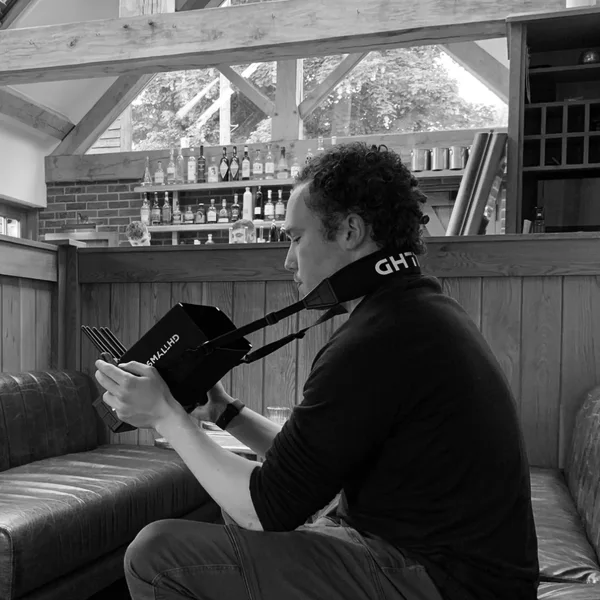
There are three ways you can help.
Connect and share any question you think the record should answer.
Connect us with organisations you know, or the one you are part of.
Connect and share any thoughts or feedback.
1. Outward Body
Your success is growing,
but is your substance?
The further you reach, the more stretched your value becomes — until what people experience is just a thread of the intention you started with.
2. Inward Body
Your craft is growing. But can the outside world see in?
The more you communicate, the more words obscure and simplify your value — until the very craft you want to share is left in the dark.
3. Whole Body
What you are growing works. But where does it live?
The more coherence exists in people alone, the more it dissolves when they move on — until what took years to build has no form beyond the people who carry it.
Which Body speaks to you?
Media
History
is filling to a point
we can’t hear each other.
words to be history,
not noise.